What Psychedelic Facilitator Training Actually Requires
People who are considering psychedelic facilitator training often begin with practical questions: How long is the program? Do I need to be a therapist? Will the certificate allow me to practice in my state?
Underneath those questions is a harder one: what does a person actually need to learn in order to do this work responsibly?
We spoke with SoundMind founder and lead instructor Dr. Hannah McLane, MD, MA, MPH, about how the program developed, why it intentionally brings together people from different backgrounds, and what prospective students should understand before applying.
Why did you create the SoundMind training program?
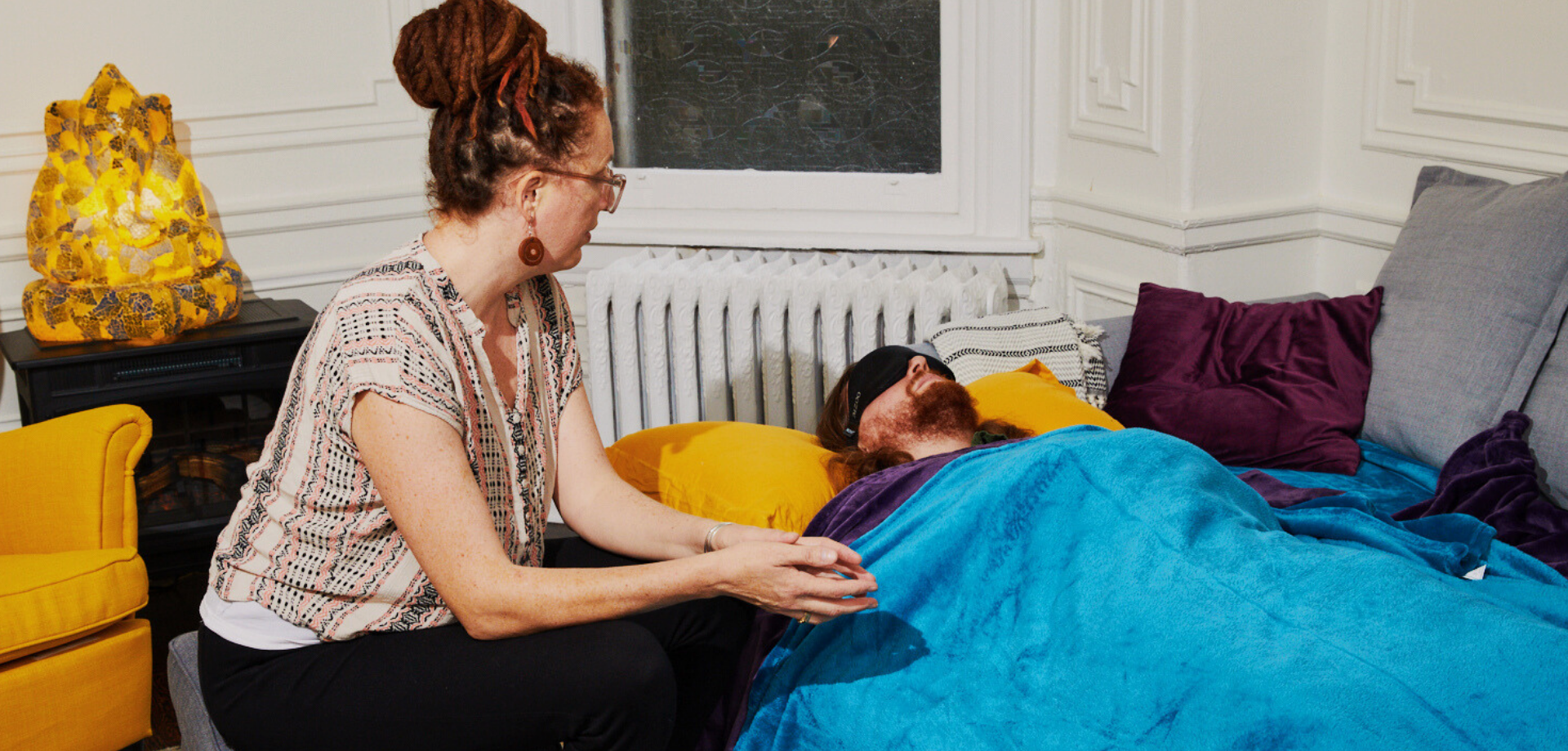
When we began teaching this work in 2019, the field was much more fringe than it is now. There were clinicians learning about psychedelics, ceremonial practitioners with deep experience outside the medical model, and community facilitators doing important work without a shared educational framework. Those groups often did not understand one another very well.
It became clear that no single background covered everything a facilitator might need. The program grew from trying to understand what each group already knew, what each group was missing, and what everyone needed in common.
Why train clinicians and nonclinicians together?
People thought I was a little crazy when I first put psychiatrists, therapists, ceremonial practitioners, and unlicensed community facilitators in the same room. My response was basically: exactly. That is why it works.
A person trained in the medical model may understand diagnosis, medication, and clinical risk but know very little about ceremony. Someone with extensive ceremonial experience may understand ritual and altered states but have less familiarity with screening or the language of mental health care. A therapist may be highly skilled and still never have been taught a genuinely non-directive approach.
The point is not to pretend everyone has the same scope of practice. They do not. The point is to let people learn across those boundaries while becoming clearer about their own role and limitations.
What do people misunderstand about psychedelic facilitation?
Knowing facts about psychedelic medicines is not the same as knowing how to sit with a person through a psychedelic experience.
Facilitation requires judgment, self-awareness, and relational skill. You need to understand preparation and integration, recognize when something is outside your scope, work with strong emotion without taking over the process, and pay attention to power, consent, culture, and the dynamics between facilitator and participant.
That is why our curriculum includes science and safety, but does not stop there. We also teach psychodynamic and non-directive skills, somatic approaches, ethics, mindfulness, ceremony, and the practical work of supporting someone before, during, and after an experience.
Why is psychodynamic training part of the program?
Students kept asking for more of the actual technique behind non-directive work. Even many licensed therapists had not been trained in that approach.
We created an eight-module Psychodynamic Techniques course to give everyone a stronger foundation. It covers core therapeutic concepts and helps students think about how they listen, interpret, respond, and avoid imposing their own agenda. We recommend completing the first three modules before live classes begin because they include useful clinical foundations for the rest of the year.
What does the weekly commitment really look like?
I try to be honest that this is not a small amount of coursework. During the live term, students should plan for roughly 10 hours a week. That includes a two-hour Tuesday class, a one-hour Thursday small group, readings, videos, assignments, and practice.
The live component runs from October through May, with the self-paced psychodynamic curriculum completed before or after that period as part of the yearlong program. People can miss an occasional class and use the recording, but this is not designed to be a passive video library.
Why keep live classes and small groups?
We started teaching on Zoom early in the pandemic, when doing an entire class online still felt novel. At first, it seemed like almost everything could move online. It took time to understand what disappears when students do not have real interpersonal contact.
A discussion board does not create the same sense of being held by a group. Live classes let people ask difficult questions in real time. Small groups give students a place to practice, discuss the material, and get to know the people learning beside them. That relationship is part of the education.
Do applicants need a clinical license?
No. We accept both licensed and unlicensed students. We are interested in a person’s capacity for ethical practice, self-reflection, sustained study, and respect for scope.
Different backgrounds lead to different roles after graduation. A licensed therapist may be able to provide psychotherapy or integration within their existing license. An unlicensed graduate may work in a support, peer, or facilitation role where that is lawful and appropriately supervised. Training does not erase those distinctions, and a certificate is not a universal license to practice.
What does the certificate allow someone to do?
The program teaches a substantial facilitation skill set. It does not give someone the legal authority to prescribe or administer a controlled substance, and it does not automatically create a right to practice in every state.
The legal ecosystem is still developing. States are creating different requirements, regulated psilocybin programs are changing, and future pharmaceutical models may create additional roles. I tell students to build a strong skill set and then understand how they can responsibly fit into the pathways that actually exist where they live.
Anyone pursuing a specific state license should speak with our admissions team about the current requirements before enrolling. We do not promise that one state will recognize another state’s pathway.
How does the practicum fit in?
In-person practicum opportunities allow students to develop skills that cannot be learned entirely through lectures. Practicum is separate from tuition, and the available medicine, location, cost, and eligibility depend on the pathway a student is pursuing.
Because those details can change, students should ask admissions about the current options rather than relying on an older webpage or a general description of the program.
Who tends to be a good fit for SoundMind?
The program tends to fit people who want to learn across models instead of staying inside one professional silo. They are interested in science and clinical safety, but also in mindfulness, ceremony, culture, ethics, and the complicated relational work of facilitation.
They also understand that this work requires self-examination. We are not only asking what technique a facilitator uses. We are asking how that facilitator understands power, handles uncertainty, responds when something difficult happens, and keeps learning after the certificate is finished.
What do students say after the program?
The most common complaint is that it does not go on forever.
I think that reflects how much students value the community as well as the content. People come in focused on what they need to know. Over the year, they also build relationships with classmates whose experience is very different from their own. That changes how they understand the field and their place in it.
The next live cohort
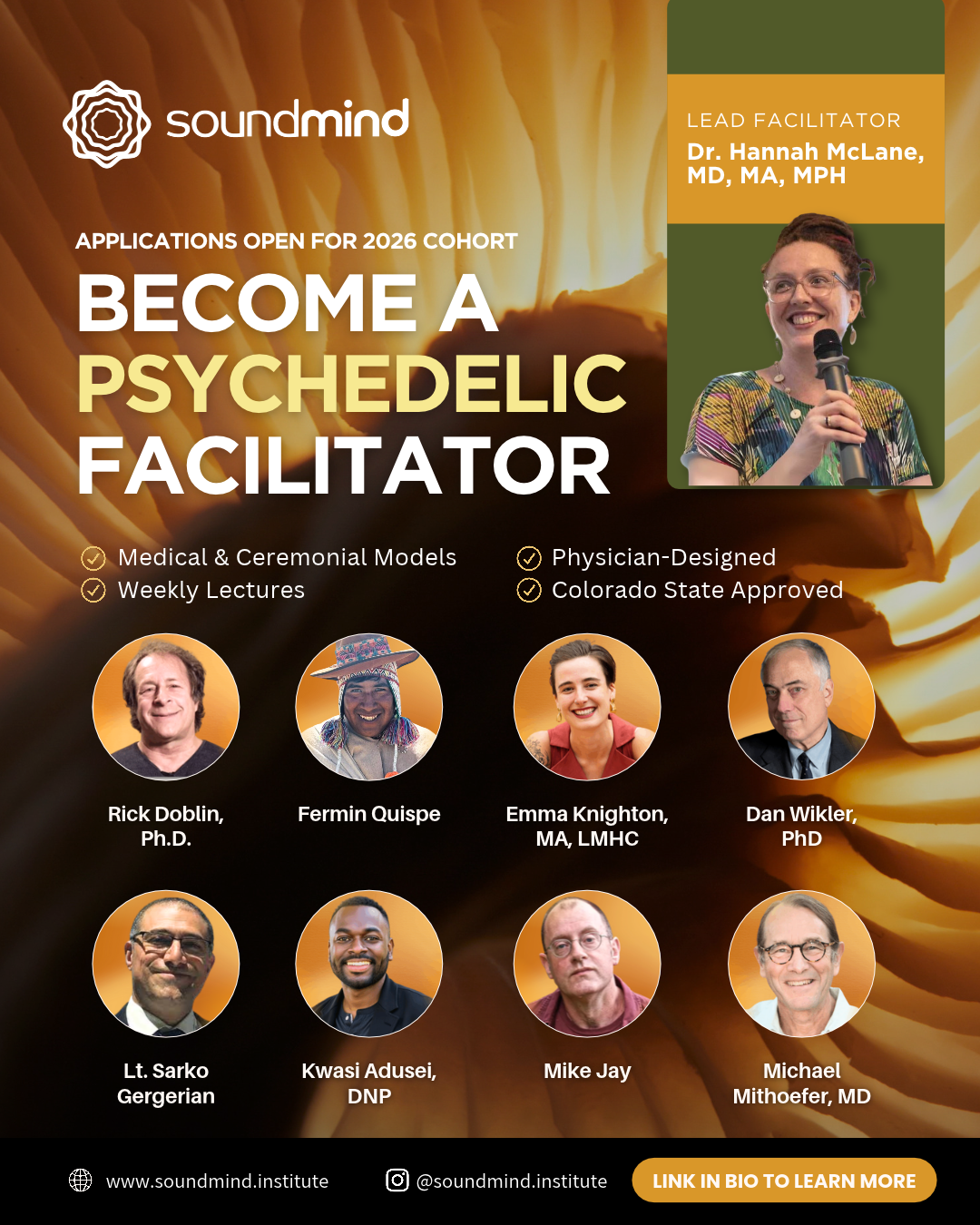
SoundMind’s next live Psychedelic Facilitator Training cohort begins October 6. The cohort is kept to approximately 20–25 students, and enrollment remains open through October 13.
A later start may sometimes be possible after speaking with admissions. If you are considering the program, apply now so the team can discuss your background, schedule, goals, and whether there is enough time for you to enter the cohort successfully.